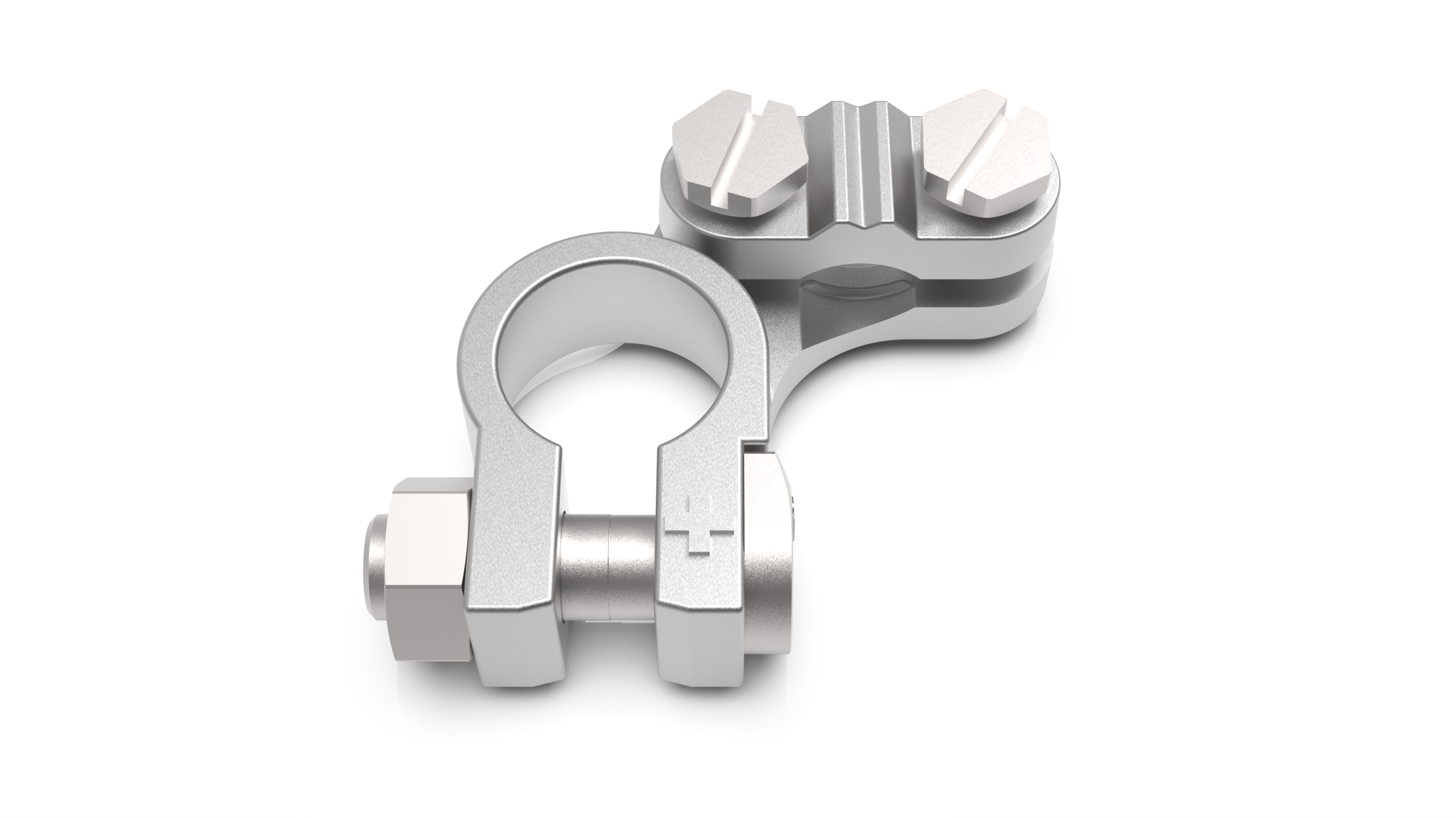
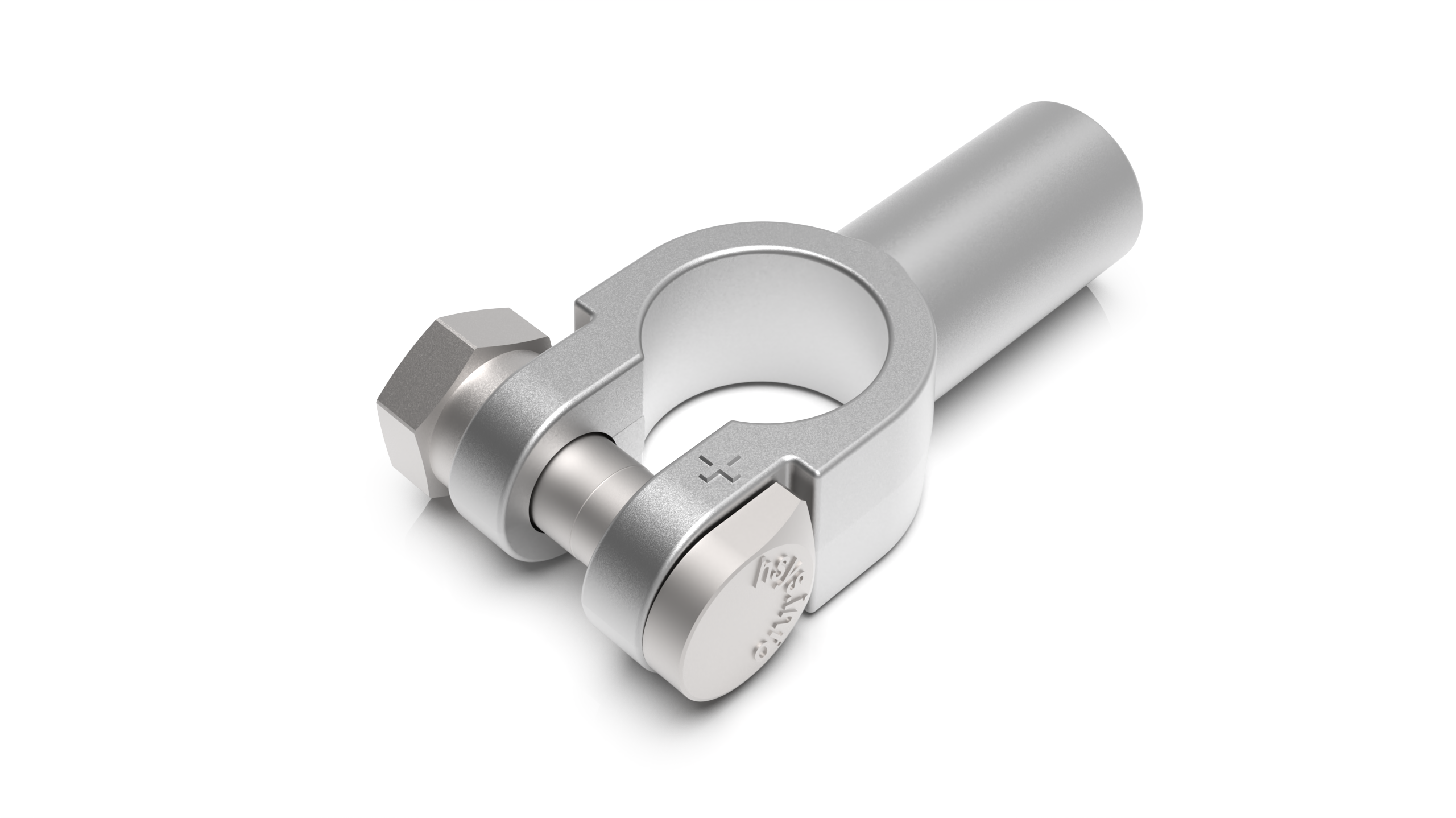
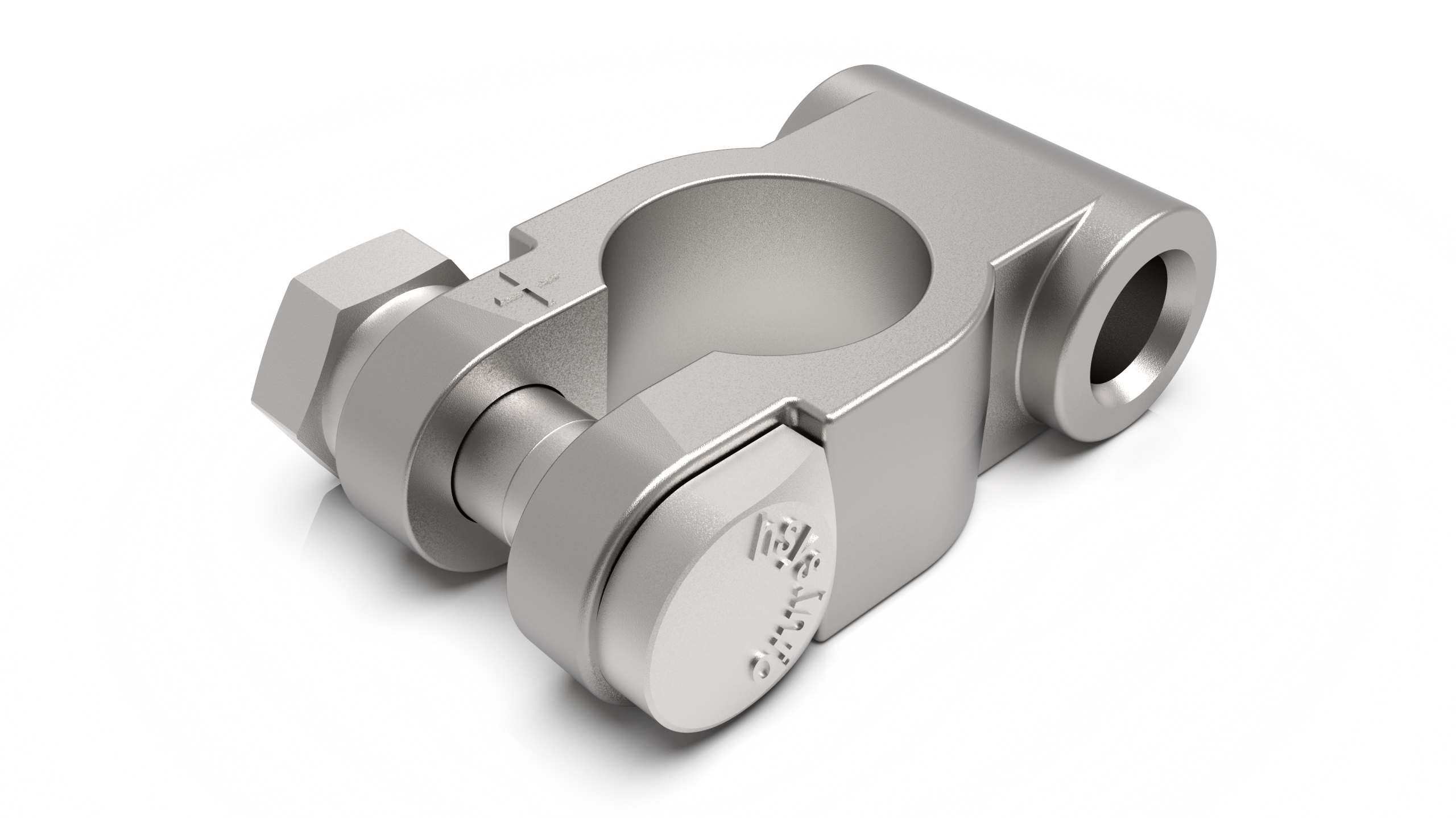
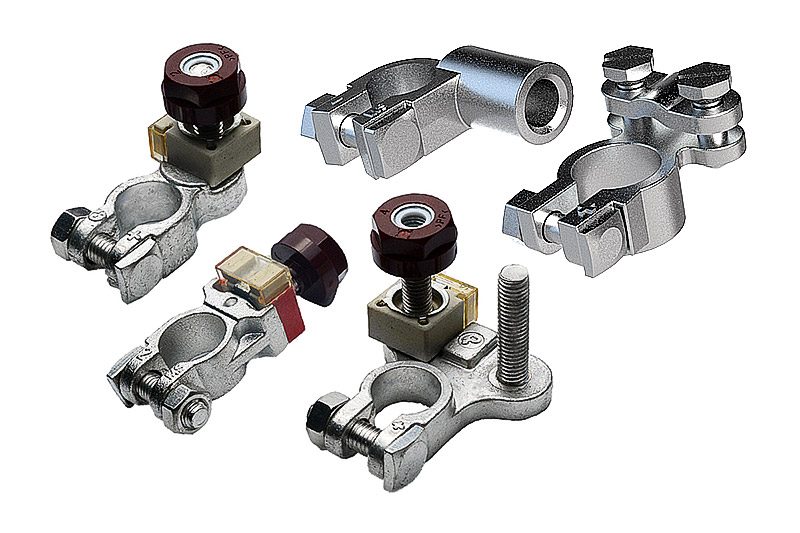

Battery terminals for safe and long-lasting electrical connections

Whether screw-type battery terminals, crimp battery terminals, or customized special solutions, Hagemann Systems offers high-quality battery terminals for industry, commercial vehicles, energy storage, agricultural machinery, and special-purpose vehicles. We support you from selection through to series production.

Battery terminals for every connection requirement

Three main categories for different connection types, loads, and installation situations.

Screw battery terminals

Proven battery terminals for standard battery connections, DIN versions, and robust applications in vehicle construction, mechanical engineering, and industrial systems.

Crimp battery terminals

Warm-forged crimp battery terminals for durable, mechanically resilient connections with straight or angled exits.

Other and custom terminals

Solder battery terminals, strap terminals, and special designs for specific connection types, installation situations, and customer-specific requirements.

Why crimp battery terminals and why screw battery terminals?

The connection type affects installation, contact quality, load capacity, and serviceability. Therefore, the terminal should match the application, conductor cross-section, and environment.

Screw battery terminals

Ideal when:

Crimp battery terminals

Ideal when:

Not sure?

Our engineers will help you choose.

Your benefits with battery terminals from Hagemann Systems

Optimized current transmission

  • Conical shape for a secure fit on the terminal post
  • Pressed terminals for higher loads
  • Large conductive cross-sections

Safe operation

  • Low heat generation
  • Protection of the operating environment against heat build-up, thereby reducing fire risks

Durable

  • Material quality and solid workmanship extend the service life of the clamp.

Wide range of variants

  • Terminals for screwing, soldering, and crimping
  • various outputs, connections, and dimensions
  • for terminals of different standards (DIN, SAE)
  • sustainable savings on follow-up costs

Engineering, Not Just a Catalog

If a standard solution doesn’t fit, we develop one together with you. CAD design, material selection, prototyping, and tooling. We support you every step of the way. Everything from a single source in Germany

Checklist: 5 Points for Choosing the Right Battery Terminal

Before selection, the connection type, surface, screw connection, manufacturing process, and environment should be checked

Type selection

The connection type determines the application area, current flow, and resistance.

Depending on the joining process, screw terminals, solder terminals, crimp terminals, strap terminals, or custom-shaped parts may be suitable. The appropriate connection type keeps power loss and heat generation low and helps prevent the connection from gradually loosening.

Surface coating

The coating indicates the quality of the terminal.

Uncoated brass corrodes quickly and increases contact resistance, which reduces performance. A tin-plated surface fills fine gaps in the material, reduces corrosion, and noticeably lowers resistance.

Screw fitting

The screw, nut, and contact surfaces must be suitable for the load and environment.

The screw connection establishes contact with the battery terminal and should not rust prematurely. Acids, alkalis, spray mist, and salt water attack zinc-plated screws more aggressively than tin-plated ones, which is why a tin-plated screw connection keeps the contact secure for longer.

Manufacturing process

The manufacturing process determines strength and area of application.

Cast terminals are inexpensive but brittle and more likely to break under vibration or bending. Machined terminals made from solid material are hard and notch-sensitive. Pressed, forged terminals are free of cavities and tough-elastic, making them suitable for high continuous loads and crimping technology.

Climate & environment

Sustainability, durability, and quality pay off in the long term.

High-quality terminals cost more to purchase, but are more sustainable and cost-effective over their service life. With increasing energy demand and rising safety requirements, the correct selection of contact elements is becoming more important.

Crimping instructions

For our crimp battery terminals and brass cable lugs, we recommend hexagonal crimping, alternatively hexagonal WM crimping. The crimping width depends on the cable cross-section used; as a guideline, we recommend a minimum pull-out force of 60 N/mm² in accordance with DIN EN 61238-1. The crimping tool must be selected to match the respective crimp barrel diameter and conductor type; for extra-fine stranded cables, the next larger bore diameter may be required. Indent crimping is rather unsuitable for brass.

Hex. crimping
WM Crimping
Indent-crimping (unfavourable)

This Is How Your Inquiry Proceeds with Us

From the initial concept to a production-ready battery terminal.

We support you technically, directly, and in a solution-oriented manner – with short communication channels, in-house manufacturing, and reliable delivery.

01 Inquiry

Send us your drawing, a sample, or the technical requirements of your application.

02 Design & Material

We propose the appropriate geometry, including alternatives and information on installation and service life.

03 Sample & Approval

Prototypes from our in-house toolmaking department. You test them in your application.

04 Series Production & Supply

Plannable deliveries, framework agreements, Kanban, or just-in-time. Production in Germany and at international locations.

What Purchasing and Engineering Want to Know

Do You Also Supply Small Quantities or Only Production Volumes?

Beides. Für Kleinmengen und Standardartikel verweisen wir gerne auf unseren Onlineshop AmpereShop.com. Für Serienmengen, OEM-Lieferungen und kundenspezifische Batterieklemmen sind Sie hier genau richtig. Sprechen Sie uns direkt an.

Schraub-Batterieklemmen, Quetsch-Batterieklemmen, Löt-Batterieklemmen, Bandklemmen sowie weitere Sonder- und Spezialausführungen.

Wenn eine dauerhaft belastbare Verbindung mit professioneller Crimpverarbeitung gefragt ist.

Wenn eine bewährte, gut zugängliche und servicefreundliche Anschlusslösung benötigt wird.

Ja. Für die dargestellten Quetsch-Batterieklemmen wird eine 6-kant-Pressung oder alternativ eine 6-kant-WM-Pressung empfohlen.

Sie suchen die passende Batterieklemme?

Senden Sie uns Leiterquerschnitt, Anschlussart, Einbausituation und Einsatzbereich. Wir prüfen, welche Batterieklemme für Ihre Anwendung geeignet ist.